
Dominant & Submissive in Victoriaville: It’s Complicated (And That’s Okay)

So. You’re in Victoriaville, or maybe you’re just passing through the Bois-Francs, and you’re thinking about this whole dominant/submissive thing. Maybe it’s just a flicker. An image. The way someone held your gaze a second too long at the Marché public. Or maybe it’s a deeper pull, something you’ve Googled at 2 a.m. with the screen brightness turned way down. I get it. I’ve been doing this work, here, for decades. Seen the couples from Plessisville who drive over because they can’t talk about it in their own living room. Seen the solo travelers passing through 55, looking for something that feels more… real than a quick handshake in a hotel bar. This isn’t San Francisco. It’s not even Montreal. It’s Victoriaville. And that changes everything.
What Does “Dominant” and “Submissive” Actually Mean in a Relationship?
It’s not about who cooks dinner or who makes the most money. Forget that noise. At its core, it’s about the conscious, consensual exchange of power. One person, the dominant, holds the reins. The other, the submissive, finds a deep, often surprising freedom in letting go of them.
I remember counselling a couple, must’ve been back in ’05. He was a big guy, ran a construction crew, loud voice. She was quiet, a librarian. From the outside, you’d guess he ran the show. But in the bedroom? Total switch. He’d get on his knees and just… wait. The relief on his face when they finally talked it through with me was something else. It’s about finding the balance that fits *you*, not what the world expects. The world expects a lot of dumb things. Ignore it.
This isn’t some fringe thing anymore, either. It bleeds into all kinds of relationships. Dating, sure. But also longer-term partnerships, and yeah, even the way some people approach hiring an escort. The dynamic itself becomes the point. The pull. For some, the title is everything. “My Master.” “My slave.” For others, it’s just a quiet understanding, a vibe you can’t quite put into words. Both are valid. Both exist here, in this little city, probably on your street.
Is It Always About Sex?
Short answer? No. Long answer? Also no, but it’s complicated. See, the power exchange can be purely ritualistic. A dominant might control when the submissive drinks their coffee, or what they wear. It’s a constant, low-level hum of awareness. For others, it’s the key that unlocks the most intense sexual experiences they’ll ever have. And for most? It’s a shifting landscape. Sometimes it’s about a look across the dinner table that says “later,” and sometimes it’s a full-on scene with more negotiation than a municipal budget meeting.
The mistake people make is thinking it’s a straight line from A to B. It’s not. It’s a loop. The trust you build in a D/s context can make the vanilla, everyday intimacy deeper. And that deeper intimacy lets you push further in your play. They feed each other. I’ve seen it happen. It’s actually pretty beautiful when it clicks.
Looking for a Dominant or Submissive Partner in Victoriaville: Where to Even Start?

Ah. The million-dollar question. Victoriaville isn’t a wasteland, but it’s not a kinky metropolis either. You can’t just walk into the Windsor and expect to find a lineup of people in leather. So you get creative. You get patient. Two things the internet is really bad at.
First, the digital world. FetLife is the old standby. Think of it as Facebook for kinky folks, not a dating site. Use it to find groups, see if anyone’s organizing a munch—that’s a casual, no-pressure meetup in a public place like Le Trèfle or somewhere for coffee. No play, just faces and names. It’s how you figure out who’s real and who’s just… lurking. But be careful. The signal-to-noise ratio can be rough. Lots of guys with usernames like “Dom4You” who think being dominant means being a jerk. Ignore them. They’re not worth your time or headspace.
Then there’s the real world. And this is where I might sound like I’m giving you a dating advice column from 1985, but hear me out. The best connections I’ve seen start with shared interests that aren’t about kink. The photography club. The hiking trails around Mont Saint-Michel. The weird little used book store on Notre-Dame. You build a connection as people. The dynamic grows from that soil. It’s slower. God, it’s so much slower. But the roots go deeper. And in a small city, discretion isn’t just a preference, it’s a survival skill. You’ll both have it if you build it this way.
What About Escorts and Professional Dominatrices?
This is a reality. A valid one. Not everyone wants the emotional labor of a relationship. Sometimes you want an experience. A professional. Someone who knows exactly what they’re doing and won’t judge the list of things you’ve kept locked in your head for ten years.
Finding that in Victoriaville proper? Tough. Almost impossible for a dedicated pro-domme. You’re more likely looking at someone traveling through, or you traveling to Trois-Rivières, Quebec City, or Montreal. If you go this route, for God’s sake, do your homework. Look for someone with a professional website, clear boundaries, and verifiable reviews. A true professional dominant isn’t cheap. You’re paying for their skill, their time, their space, and their absolute discretion. If it feels sketchy, it is. Listen to that feeling. It’s the most dominant part of you trying to keep you safe.
How Does the Power Dynamic Work in a Healthy D/s Relationship?

This is where we get down to the brass tacks. Forget what you’ve seen in bad movies. A healthy D/s relationship runs on communication, not whips and chains. The whips and chains are just props. The communication is the main event.
It starts with negotiation. Before anything happens. You talk about wants, hard limits, soft limits. What does “dominant” mean to you? What does “submissive” mean to you? You’d be shocked how many people assume these things mean the same thing to everyone. They don’t. For one sub, it might be about feeling cherished and protected. For another, it’s about being pushed past their limits. A good dominant knows the difference because they asked. Because they listened. Not because they can read minds. That’s a fantasy. A dangerous one.
Then you have the scene. The play. This is where the dominant leads, and the submissive follows. But here’s the thing: the submissive is the one with the real power. They’re the ones giving the gift of their control. A good dominant knows they’re just the custodian of that gift. And it’s a gift that can be revoked at any time. That’s what a safeword is for. It’s not a failure. It’s the ultimate safety net. It’s the word that stops everything, no questions asked.
And then, after, you have aftercare. This is non-negotiable. You’ve been to some intense emotional places. You need to come back. Cuddling, talking, a blanket, some water, watching something stupid on Netflix. It’s the reconnection. The reminder that you’re people who care about each other, not just roles you played for an hour. I’ve seen big, tough, “alpha” dominants turn into the most tender caregivers after a scene. That’s not a contradiction. That’s the whole point.
What’s a Safeword and Why Do I Need One?
A safeword is a word that immediately stops all play. Completely. It’s not “no” or “stop,” because in some dynamics, “no” is part of the game. The safeword cuts through all of that. It’s the emergency brake. Popular ones are “red” for stop, “yellow” for slow down/check in. Simple. Clear. You need one because even with the best planning, things can go sideways. An emotion can hit harder than expected. A physical sensation can tip over from pleasurable to panic. The safeword is your shared language for “I’m not okay right now.” Using it isn’t a sign of weakness. It’s a sign of self-awareness and trust.
The Unspoken Rules of Attraction: What Draws Us to Power Exchange?

This is the part I find most fascinating. The why. Why would someone, in this day and age, willingly give up control? And why would someone want to take it?
For the submissive, I think, it’s about freedom. Paradoxical, I know. But think about it. Your whole day, you’re making decisions. What to eat, what to wear, what to say in that email, how to navigate that passive-aggressive comment from your aunt. It’s exhausting. The idea of just… handing that over. Of saying, “You decide. I trust you.” It’s a massive weight off. It’s a space where you don’t have to perform. You just have to be. And feel. It’s a vacation from the self.
For the dominant, it’s about responsibility. Not power, not really. The power is just the tool. The responsibility is the burden and the joy. It’s being trusted with someone’s deepest self. Someone hands you their fears and their desires on a silver platter and says, “Do with this what you will.” That’s not something to take lightly. A good dominant feels the weight of that. They want to be worthy of that gift. They want to create a space so safe that the submissive feels they can fly, or fall, or shatter, and be put back together. It’s a hell of a thing to be trusted like that. It changes you.
And sometimes? Sometimes it’s just about the physical. The sheer chemical rush of endorphins and adrenaline. The subspace a sub can drop into is like a powerful drug. And for a dom, watching that happen, guiding it… there’s nothing like it. It’s a high. A real one. And like any powerful experience, it needs to be handled with respect.
Is There a “Right” Way to Be Dominant or Submissive?
No. Full stop. There are as many ways to do this as there are people doing it. You have your stern, fatherly types. Your playful, teasing types. Your strict, regimented types. Your gentle, nurturing types. On the other side, you have service-oriented subs, brats who need to be tamed, littles, pets… the list goes on. The only “right” way is the way that works for you and your partner. The way that makes you both feel seen, satisfied, and safe. Don’t let anyone tell you you’re doing it wrong because you don’t fit their little box.
Navigating the Victoriaville Dating Scene with D/s Desires

Okay, so you’re single, you live here, and you’re trying to date with this as part of your identity. How do you bring it up? Not on the first date. Please. Not over a poutine at La Faim. It’s too much. It needs context.
You wait. You see if there’s a real connection first. You talk about normal stuff. Family, work, why the hell they put a roundabout on boul. des Bois-Francs. You gauge their openness. Are they curious? Judgmental? Closed off entirely? You can start with broad questions about relationships, about trust, about what turns them on. You’re not interviewing them, but you’re also not hiding. You’re just… gathering data. Like a slow, sexy scientist.
And when you do bring it up, you don’t lead with “I am a Dominant and you will call me Sir.” You lead with your feelings. “I’ve always been drawn to relationships where there’s a clear… I don’t know, a clear flow of energy. Where someone leads and someone follows. It just feels right to me.” You make it about you, not about what you want them to be. See how they react. If their eyes light up? Bingo. If they look confused but interested? You can explain more. If they look uncomfortable? You have your answer. It might not be the answer you wanted, but it’s an answer, and now you know. And you can move on.
What if My Partner and I Have Different Kinks?
Welcome to the club. This is the norm, not the exception. Maybe you’re into heavy bondage and they’re more into ritualistic service. So what do you do? You negotiate. You compromise. Maybe you do your thing one night, their thing the next. Maybe you find the overlap. That small, surprising place where your kinks intersect. And sometimes… you accept that you won’t get everything from one person. And that’s okay too. It’s a hard truth, but a useful one. You can have a deeply fulfilling D/s relationship that doesn’t check every single box on your list. The relationship itself is the main thing. The kinks are just the spices.
The Unspoken Etiquette of Kink in a Small City
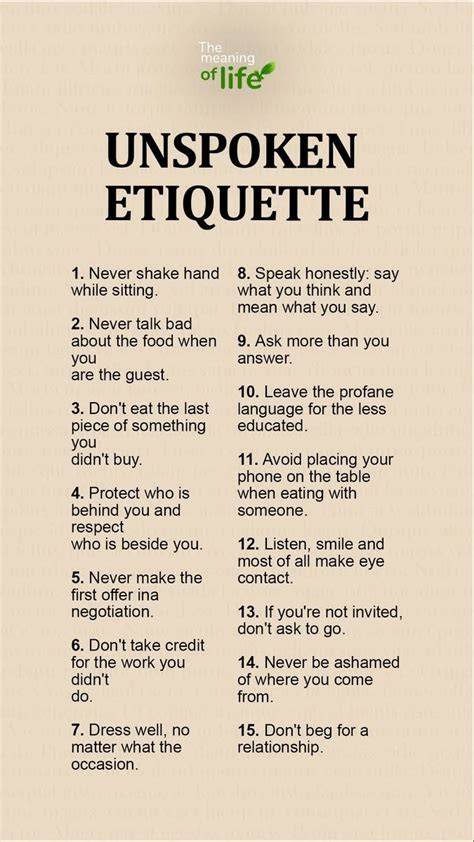
This matters. More than it does in a big city. In Montreal, you can go to a club and be anonymous. Here? The cashier at Maxi might have been at the same munch as you. The guy fixing your car might have a profile you messaged once. Discretion isn’t just polite, it’s practical. You learn to be cool. You learn the value of a nod of recognition, not a loud “Hey! How was that scene last week?” in the middle of Canadian Tire.
This creates a certain… texture. A quiet understanding. It makes the connections you do make feel more precious. More real. Because you’re both taking a risk. You’re both trusting the other with something that isn’t just your body, but your reputation, your place in this community. It’s intense. And it can either burn you or forge something incredibly strong. I’ve seen it do both.
How Do I Stay Safe Meeting Someone New?
Meet in public first. The diner on Arthabaska. The park by the river. Somewhere bright, busy, and boring. Tell a friend where you’re going and who you’re meeting. Not all the details, but enough. “Meeting someone from online for coffee.” Check in with them after. For the first few play sessions, meet at a neutral, safe space if you can. A dungeon if there’s one accessible (rare), or a hotel you’re both comfortable with. Take your time. Real dominants and real submissives understand the need for safety. The ones who push back, who say “just trust me,” who demand you come to their place alone at 10 p.m.? Those are the ones you run from. Fast. Your gut instinct is your best tool. Use it.
The Psychology of Power: Why “Normal” Rules Don’t Always Apply

Here’s where I get on my soapbox for a second. There’s this weird judgment you see sometimes. People think D/s dynamics are somehow… damaged. That it’s about past trauma or an inability to have an “equal” relationship. And maybe sometimes it is. People bring their baggage into everything. But mostly? I think it’s just a different operating system. It runs on different code.
In a “normal” relationship, equality is the goal. Everything is supposed to be 50/50. And that’s fine. It works for a lot of people. But in a D/s relationship, the goal is synergy. It’s not about splitting everything down the middle. It’s about each person playing their role so well that the sum is greater than the parts. The dominant leads, but they are also serving the submissive’s need to be led. The submissive follows, but they are also guiding the dominant by their trust and their reactions. It’s a feedback loop. A dance. And it can be more balanced, in its own way, than any “equal” relationship I’ve ever seen. It’s just a different kind of balance. A dynamic one.
So what does that mean for you, in Victoriaville, reading this? It means don’t apologize for what pulls you. Don’t explain it away. Just understand it. Explore it. Carefully, thoughtfully, with as much communication as you can muster. It’s a part of you. And it’s probably a more interesting part than you give it credit for.